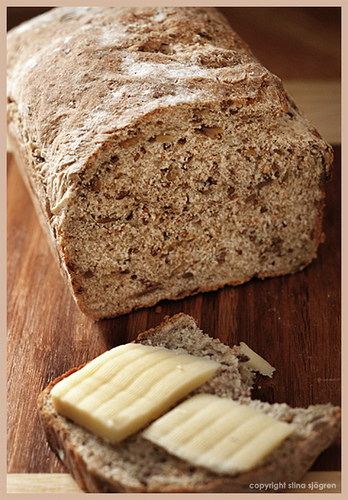
Bread, the staff of life? Not any more!
The humble loaf of bread in some form or another has played a significant part in the human diet since biblical times and the dawn of the agricultural era many 1000's of years ago. This ubiquitous food and its basic ingredient, wheat, has worked its way into almost every meal time and snack from breakfast through to dinner. Toast, bagels, croissants, pancakes, cereals, sandwiches, wraps, baguettes, burgers, pizza, pasta, rolls, couscous, crackers, cakes, biscuits etc. etc. etc. And that is just some of the more obvious sources. Bread (and wheat) has been revered for its nourishing and life supporting properties and as such has historically been referred to as the 'Staff of life'.
The question is does modern wheat and bread still deserve this honoured title and position as the most essential and basic of dietary needs?
To answer this important question we need to go back to the beginning...always a good place to start! I mean the beginning of the emergence of wheat as one of the dominant crops in our modern age. Wheat originates many thousands of years ago from a grassland species known as einkorn. This grain was very different from the wheat we know and use today. It later cross bred with another grassland species and was known as emmer. The closest naturally occuring relative of the wheat we know today was given the name triticum aestivum. Already this predecessor had completely changed in terms of its genetic structure compared to einkorn, the most obvious difference being seen in a change in the very heart of the plants genetic code - einkorn having only 12 chromosomes and triticum aestivum having 48. However the real worrying changes began in the 1940's and 50's when post war scientists began trying to address the need to increase yields to feed a post war, rationed population.
Prior to the 1940's wheat was a fairly tall plant with much smaller grains of wheat than we see on modern plants. As scientists began in the 40's to hybridise wheat and selectively breed and change its genetic code they sought first to increase the size of the grains on each plant to get more food and flour when it came to be harvested. They did succeed in this endeavour, but larger grains meant a much heavier head on the wheat and this tended to cause the stalk to buckle under it's own weight. This led to ruined crops that were difficult to harvest. The next step was to try and genetically select crops that were shorter. Again they were soon successful in developing the 18 inch tall, large grain version of triticum aestivum that is used today. This shorter plant prevented the tall problems previously endured. This was seen as a huge success and was hailed as a major scientific and farming break through. However, at that time there was absolutely no concern over whether all the changes and adaptations to the wheats basic genetic structure would have any impact on its suitability as a food. It was simply considered to still be a pure food and therefore must be completely safe for human consumption. Unknowingly this new hybridised dwarf wheat with its easier harvesting benefits and higher yields quickly swept across the globe as the seed of choice for wheat farmers. Today more than 99% of all wheat grown across the planet is modern dwarf wheat. Since that time the scientific methods required for food safety following genetic alteration of a food have become much more rigorous and indeed there is a lot of opposition to the growing influence of gentically modified foods in the human food chain. You only need read activist Jeffrey Smith's book, Seeds of Deception, to quickly get a picture of the problems associated with GMO's. Yet these concerns with modern wheat have never been tested and as a result the human population have been the testing ground for this food genetically altered food source for over 60 years!
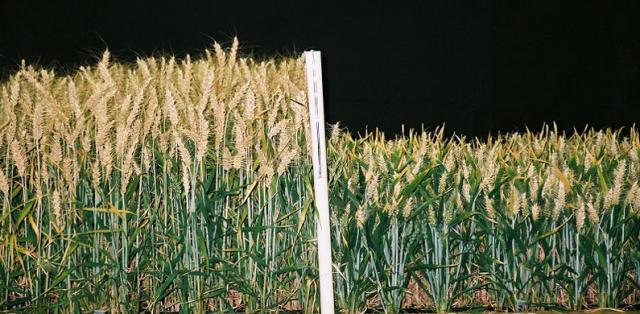
Normal wheat compared to dwarf wheat
So is there any evidence to suggest that modern wheat is causing problems in human health?
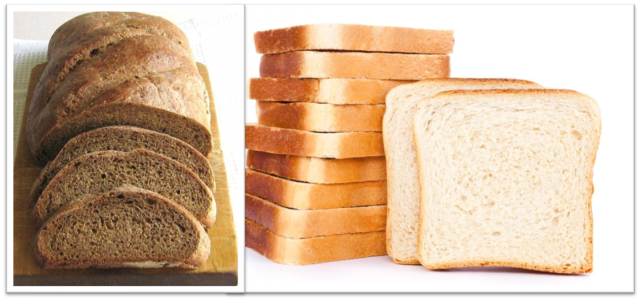
Well, to begin with modern wheat has more than 10 times the level of gluten, a wheat protein, than its earliest ancestor, einkorn. This has had its benefits for the food manufacturing industry. It makes the wheat hardier and able to endure the fast , mechanised bread making processes devised in the late 1950's. Higher levels of gluten allow for stretchier bread dough which helps to create a finer, fluffier texture to bread. Many today probably do not even realise that this is not what bread is meant to be like. Real bread from traditional grains is a much denser, heavier loaf that fills the stomach and satisifies much quicker than the cheap, air filled loaves we have become accustomed to today. The increased gluten levels in wheat have certainly had some negative consequences. The rate of non-celiac gluten intolerance has been steadily increasing with some studies showing more than a doubling of the incidence in the population between 1978 and 2001. This type of intolerance can lead to bloating, flatulence and digestive distress. Gluten derived polypeptides from wheat have also been shown to cross the blood brain barrier and bind to the very same neural receptors as opiate drugs, creating a sort of morphine-like high. This indicates, and has been shown in clinical practice, that modern wheat has significant addicitve properties. So next time you can't help craving that bit of cake, a biscuit, a bagel or crisp slice of toast it may not be weak will power, but the subtle cravings created by the addictive properties of wheat on the nervous system.
Wheat is predominantly a starchy carbohydrate. This is usually promoted as being a beneficial characteristic under the guise of starchy carbs being more slowly absorbed and providing longer lasting energy. Starchy carbohydrates are simply chains of the simplest sugars, in this case glucose, that are built up into larger molecules. In wheat 75% of the starches are made of branching chains of glucose called amylopectin. There are 3 types of amylopectin - A, B and C. Of these types wheat contains amylopectin A, which is by far the most rapidly digested and absorbed of the 3. Considering that the majority of wheat consumption is through fine milled flour, whether refined or whole grain, this means that wheat products have a powerful impact on blood glucose levels and are able to drive blood glucose up very quickly! Looking at the official University of Sydney glycaemic index (GI), refined white bread has a GI of between 70 - 89 with a glycaemic load (GL) of 10 - 18. Wholemeal bread has a GI of 68 - 85 with a GL of 7 - 13. So in terms of rate of blood glucose increase and the amount of carbohydrate to dump into the bloodstream there is not too much difference between the 'bad' white bread and the supposedly 'healthy' wholemeal bread. They will both rocket blood sugar up through the roof in remarkable style. When you consider that sugar has a GI range of 58 - 65 and GL of 6 or 7, honey a GI range of 44 - 58 and GL of 9 - 13 and finally maple syrup a GI of 54 - 68 and GL or 10 - 15, it really puts things into perspective. Both white or wholemeal bread will raise blood sugar at a faster rate than sugar, honey and maple syrup and have a comparable or greater carbohydrate load to dump into your system as well! Yet for some reason we are told that wheat and bread should be the 'staff of life' or that we should base our meals on such 'healthy' foods. Yet it is common knowledge that sugar in excess is bad for your health.
The constant battle in modern Western society with managing weight is directly correlated to the inability to manage blood glucose levels effectively. Regularly elevated blood glucose leads to chronically high levels of insulin in the blood, which leads to excess body fat storage, elevated blood triglycerides and small dense lipoproteins (bad cholesterol markers), insulin resistance (pre-diabetes), increased stress, elevated blood pressure and leptin resistance (insatiable appetite) to name but a few of the major issues! If modern bread and wheat products have such an impact on blood glucose and are eaten regularly then it is not too big an assumption to link their regular intake to many of our modern disease problems.
Traditionally bread was a fairly simple food with a very basic recipe. Indeed bread could be made with as little as wheat flour, water, some oil and salt. Some recipes don't even use the oil. I have tasted some delicious, sweet sprouted grain organic breads that literally only use sprouted wheat flour and water and nothing else. It is a denser loaf, perhaps similar in texture to a modern malt loaf, but with only 2 natural ingredients it is very nourishing. Today's modern industrially produced breads are made in only a couple of hours from a much broader range of ingredients. This is a list of the ingredients in a very common, popular brand of bread currently sold in UK supermarkets:
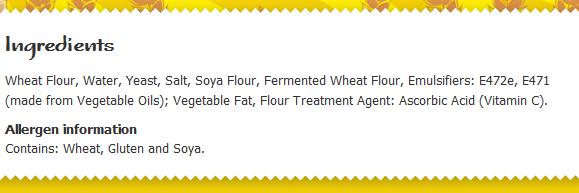
As modern loaves go this is a fairly standard ingredient list, but has expanded to at least 10 identified ingredients. The mass produced wheat for a start will be laden with hormone disrupting pesticide and herbicide residues that can become a toxic load for the body to manage. Indeed all industrially produced breads use bakers yeast rather than the traditional sour leavening process to speed up the proving period and allow bread making to be completed much sooner. However, high yeast levels in factory produced bread, often 3 times the level used in typical homemade bread, may be increasing the likelihood of difficult to manage yeast infections such as candida albicans.
It is almost impossible to find a loaf of bread in the supermarket that does not use soya flour as a cheap extender. This ingredient adds protein to the mixture and makes the loaf a little firmer to help keep its shape. However, soy and soy flour are also associated with numerous health concerns from hormonal disruption and thyroid dysfunction to digestive distress and inhibited mineral absorption. Look into Dr Kaayla Daniels work on soy if you want to learn more about this subject.
The E472e is an emulsifier used to help blend the fat and water ingredients, but these are often derived from cheap GM soy bean oil. It is also known as mono and diglycerides of fatty acids which in most cases will contain small amounts of trans fatty acids which have been long proven to have negative heart health implications.
Finally the flour treatment agents can include a broad range of chemicals used to help in the mechanised bread making process and can include bread or dough improvers or conditioners, bleaching agents, oxidising agents, reducing agents or enzymes. In this instance the agent identified is industrial grade ascorbic acid which is a reducing agent that helps with the glutenous properties to form a better loaf.
So can it be said with any degree of honesty that the modern loaf of bread is 'As good today as it's always been' as states a big bread companies recent advertising campaign??
Bread in years gone by was made from naturally occuring, organic (there would have been no other kind back then) sources of wheat and was crudely mixed together to form a basic, firm and dense loaf. There is no doubt that this bread was highly nutritious and was a great basic food in early man's diet, it certainly qualified for the accolade 'the staff of life.' Modern bread, on the other hand, does not even come remotely close to that. It is so far removed from the nourishing food that was eaten in the past. Even the very core ingredient, the hybridised wheat itself, did not exist 70 years ago, never mind all the other health disrupting ingredients used today.
So what should you do? Avoid the majority of factory made bread for a start. Another simple suggestion may be to look to buy your own organic rye or spelt and go back to the way things once were and make your own bread each week. Besides, just think about warm homemade bread straight out of the oven with a generous helping of organic butter and unpasteurised cheese!! Absolute heaven! That should be motivation enough to at least give it a try!