
Hydration - thirst for truth
It is no secret that the human body needs to have an adequate supply of fluid to maintain hydration and promote optimal health. Feelings of thirst begin at less than 1% dehydration, by 3% dry mouth and at only 4% dehydration a 20-30% reduction in work capacity is experienced. However, knowing the importance of hydration and successfully achieving an optimal level of cellular hydration are two entirely different things. This blog will look at a number of the factors that can influence our hydration status right down at a cellular level, including:
- Volume of fluid consumed
- Sugar content of the fluid
- Electrolyte content of the fluid
- Alcohol and caffeine content of the fluid
- Contribution of food
Volume of Fluid
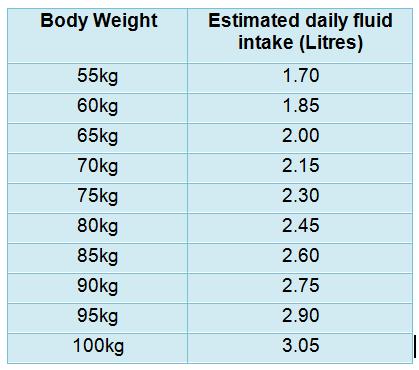
The Foods Standards Agency has set their advice for fluid intake to an average of between 6-8 glasses (1.2 litres) of fluids per day. However, the World Health Organisation sets fluid intake at double the level for adults to a range between 2.2 to 2.5 litres per day. This may be due to the WHO consideration for the wide and varying temperature differences across the globe, whereas here in the UK with a more temperate climate lesser fluids are needed compared to hotter countries. However, the meager 1.2 litres advised by the FSA still seems to be somewhat lacking. Regardless of these differences it is highly unlikely that a ‘one size fits all’ guideline is going to be appropriate when it comes to fluid intake anyway. There is no doubt that an individual’s size and activity levels should, of course, play a part in the level of fluid required to reach optimal hydration each day. The following table provides a useful outline of basic fluid needs in relation to body weight. During days when activity levels are higher water lost in sweat should of course be replaced on top of these guidelines.
‘Cellular hydration, however, is more complex than simply guzzling water. Fluid is constantly moving in and out of the cell across…the cell membrane. Drinking water will improve your overall hydration status, but it will not significantly alter the ratio of intracellular to extracellular fluid.’ (HGH Magazine)
It is clear from this statement that other factors help to control whether there is fluid actually within the cells of the body rather than simply being in the blood stream.
Sugar content
Sugar is well known to have a negative impact on our health as it ravages human metabolism. In addition sugar dissolved in a fluid or drink also has a significant impact on the hydrating capacity of the fluid. In general terms if the fluid has a higher sugar solution than the normal levels found in the blood stream, it has the potential to draw fluids out of the cells and dehydrate them. If the sugar solution of a drink is kept lower than the normal concentration of blood it has the potential to help move fluids into the cells and potentially hydrate them. Whilst this is not always strictly true as other factors also influence, it does provide a principle of guidance in regards to consuming sugar containing fluids and their ability to hydrate. If we take it that the concentration of sugar in the blood is normally maintained around 4-5% solution then a hydrating drink myst fall below this level. The more the sugar solution of a drink is above 4-5% the more powerful its dehydrating capacity. The following table offers some direction on this with a view of some commonly consumed drinks.
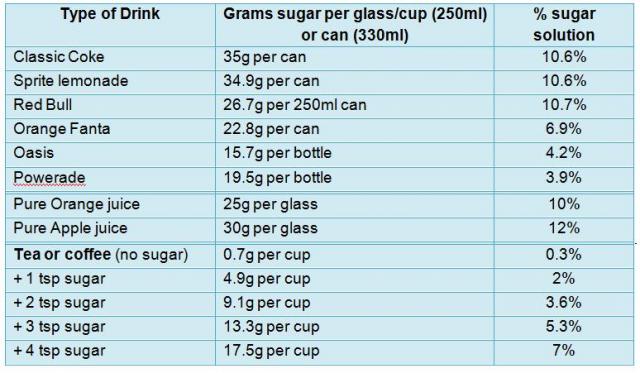
It is interesting to note that both pure apple and orange juice have a sugar solution simliar to many common soft drinks at 10-12%. At more than twice the dissolved sugar content as that found in the blood, both fruit juices and soft drinks will have a powerful cellular dehydrating effect!!
Electrolyte content
Electrolytes are most commonly derived from the mineral content of a drink. Minerals such as sodium chloride or magnesium chloride dissolve into solution and can have a significant impact on the movement of fluid in and out the cells of the body. Indeed electrolytes have been identified by experts as having the greatest influence on shifting fluid either into or out of the cells of the body. This is the reason that many sports drinks and rehydrating salts contain some sort of mineral or electrolyte solution. Many sports drinks are also fairly sugary and as such may not hydrate as well as may be expected, but with the inclusion of the correct type of minerals into the drink this can increase its hydrating capacity. Alternatively the complete absence of minerals will reduce the hydrating potential of any fluid. The addition of a very small amount of unprocessed, mineral rich sea salt can increase the hydrating potential of the drink. The amount to be added should only be enough so that the 'salt' taste is only just sensed. This will vary from person to person based on their salt or electrolyte needs.
Interstingly a study published in 2007 found that skimmed milk was a much more effective option at rehydrating the body after exercise compared to plain water or even Coca Cola's brand sports drink, Powerade. The researchers stated that they believed the presence of naturally occuring minerals in milk, such as sodium and potassium were responsible for some of this difference. Whilst we at NFF are not proponents of skimmed milk in any way, it still shows some benefits for milk as a recovery drink. One can only imagine how much better the refuelling and rehydration would have been if high quality raw milk was used instead! Some biochemistry texts indicate that fat is much more hydrating to the cells that proteins and carbohydrates so full fat milk may have been even better.
Mineral water
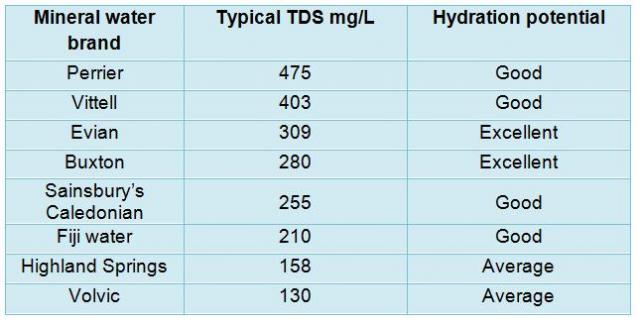
Mineral rich waters can be very beneficial for supporting cellular hydration providing the mineral contents are sufficient. Better quality mineral waters have a Total Dissolved Solids (TDS) around 300mg/L. TDS levels higher than 500mg/L are really getting too hard and not as desirable. However, many cheaper mineral water brands are very soft and have a low TDS below 100mg/L. These water choices, whilst not harmful in any way, will not be as beneficial in terms of achieving optimal hydration. The following table reviews a number of popular mineral water brands and identifies the TDS level and its potential cellular hydration capacity.
Alcohol and caffeine
Both alcoholic and caffeinated beverages have gained a reputation as drinks that dehydrate the body. Up to date research suggests that tea and coffee without added sugar does not necessarily increase the level of excretion any higher than the same volume of water would induce. However, the addition of sugar, as explained earlier, to such beverages can have a negative impact upon hydration. Therefore suagr should not be added it hydration is the goal.
Whilst caffeine does not have a concerning diuretic effect, it is an addictive compound and has other potentially negative effects on the body, so should be avoided or moderated considerably. Scientific trials clearly show that alcohol does increase the amount of fluid excreted in comparison to the same volume of water consumed. This occurs in a dose responsive fashion. The more alcohol consumed whether in total volume or in strength of drink the more the body needs to excrete fluids to remove this harmful compound. Dehydration becomes even more of a factor with drinks higher than 2% alcohol. The reason for the increased urination is the body diluting and removing the toxic alcohol from the system. The removal of the alcohol becomes a higher priority to the body than maintaining levels of hydration. Optimal hydration will not be achieved in any way through the consumption of alcoholic drinks. This is particularly problematic after particpating in sports or physical activity where the cells are likely to already be somewhat dehydrated from sweating. Alcohol should be avoided or significantly reduced. If alcoholic drinks are consumed then at least a glass of quality water should be consumed between each beverage to offset water losses.
Conclusion
Hydration deep within the cells of the body, not just increasing the fluid in the blood stream, is a vital aspect of human health. Yet today so many of the drinks that are consumed have the potential to neagtively impact on cellular hydration which will in turn alter celluar function and potenially reduce our long term health. Hydration is simple:
- Drink enough for your needs
- Avoid sugary drinks
- Avoid alcohol
- Milk can be an effective rehydration drink
- Dissolve small amounts of natural salts in water or
- Drink mineral rich water!