
Chocolate Unwrapped!
I have been asked several times whether chocolate is a healthy food? Most people ask this question tongue in cheek expecting to be told that of course chocolate is bad for you! However, it seems when they ask that regardless of the answer they are determined to continue to eat chocolate even if it does turn out to be bad news! Well I had intended for a while to write a blog on our love affair with the world's most sought after treat - so here goes.
The chocolate industry is reported to generate revenues in excess of $50 billion per year and the market is still growing. Chocolate has a major food presence on 5 out of 7 continents of the world. Some of the major manufacturers are well known global food names such as Nestle, Hershey's, Kraft, Lindt, and Mars. Kraft are not typically known for chocolate, but as they purchased Cadbury (reportedly the world's largest confectioner) in February 2010 they are now a significant player. Cadbury had previously acquired the organic, fairtrade brand Green and Black's which by default is now also owned by Kraft. Nestle purchased Rowntree's in 1988, they also own the Milka brand and have since begun to retail their own Nestle brand of chocolates.
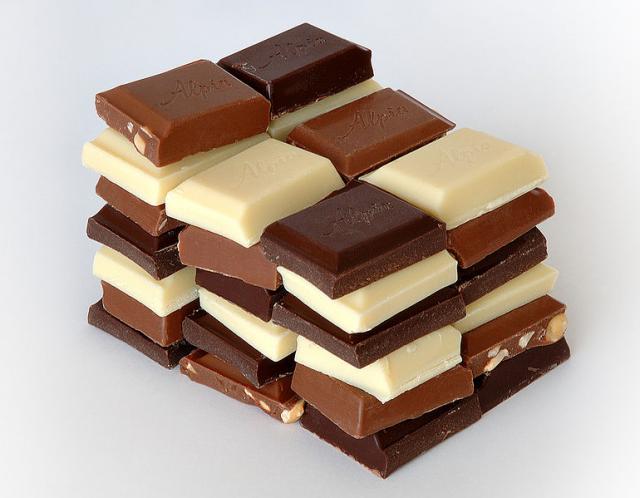
There are 3 primary types of chocolate; white, milk and dark. White chocolate is comprised mainly of cocoa butter, sugar, milk solids and vanilla. Milk chocolate contains at least 20% cocoa solids (in the UK - 25% in the rest of the EU), sugar, milk solids and sometimes other vegetable oils. Dark chocolate normally requires a minimum of 35% cocoa solids, with higher levels of cocoa butter and lower levels of sugar. Of the 3 primary types white chocolate tends to contain the highest sugar levels, lots of powdered milk solids and can in some instances contain processed vegetables oils. As such it is safe to assume that white chocolate has the lowest nutritional value of the 3 main categories. There are other compounds and nutrients that are found within chocolate. I created the following table to make a nutritive comparison between pure cocoa, milk and dark chocolate. Take a few moments and review the information - it is quite interesting.
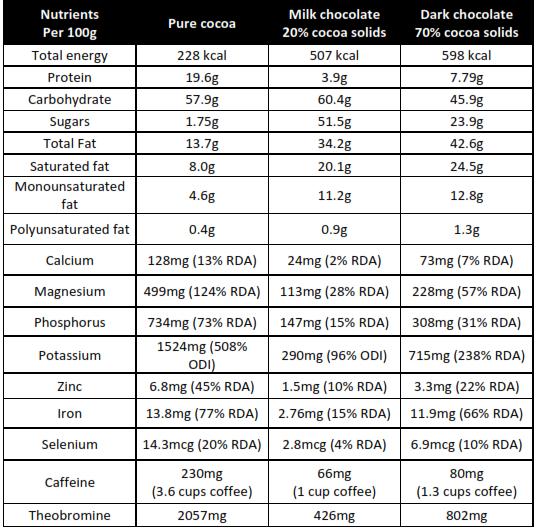
Firstly it is clear that pure cocoa is full of many nutrients. It is clear that the amount of cocoa solids present in the types of chocolate has a bearing on the nutritive content. The higher protein value in dark chocolate is primarily due to the higher dry cocoa content. Dark 70% chocolate has only 24g of sugar whereas milk has typically double the amount at 51g. Dark has a higher total fat content by 8g, but the type of fat is where the real difference is. It can be seen the mono and polyunsaturated fat levels are very similar, but the saturated fat content in dark chocolate is 4g higher. This difference is due to the higher cocoa butter content that is present in dark chocolate. This increased fat content helps to maintain an smooth mouth feel and flavour despite the higher dry cocoa solids which tend to be quite bitter. Theobromine is a compound from the same family as caffeine and it has similar effects as caffeine upon the body. Therefore whilst a whole 100g bar of chocolate only has approximately 1 cup of coffee's worth of caffeine it has a potent dose of theobromine which will add a significant stimulatory response upon intake. As a result it only takes a few squares of milk or dark chocolate and the combined sugar, caffeine and theobromine content will provide a significant stimulus. This is partly what makes chocolate such as enjoyable and potentially addictive food. Cocoa and chocolate have been found to have beneficial effects by many research papers. Here are a few:
- Dark chocolate has been found to contain a rich supply of antioxidant flavonoids even richer than other well known sources such as green tea and red wine. Dark chocolate can contain 3 times as many flavonoids as milk chocolate.
- Interestingly the rich level of polyphenols found in dark chocolate have been found to contribute to decreases in blood pressure and fasting blood insulin levels when compared to white chocolate.
- The antioxidants in cocoa and chocolate have been found to have vasodilatory, anti-platelet coagulation and anti-inflammatory effects and thus may play a role in reducing cardiovascular risk.
- Cocoa butter contains approximately 35% of the monounsaturated fat oleic acid (the dominant fat in olive oil) considered to be heart healthy and 35% stearic acid, a saturated fat considered to neutral with regards to heart health. Experts believe that the cholesterol raising effects of the 25% palmitic acid that make up cocoa butter are offset by the effects of the other two types of fat in cocoa butter.
- The consumption of dark chocolate has also been found to reduce the levels of stress related hormones such as cortisol in those experiencing excessive, chronic stress.
- Researchers have found that milk appears to reduce the absorption of beneficial antioxidants from chocolate and found the levels of flavonoids absorbed from dark chocolate to be 2.5 times greater than milk chocolate.
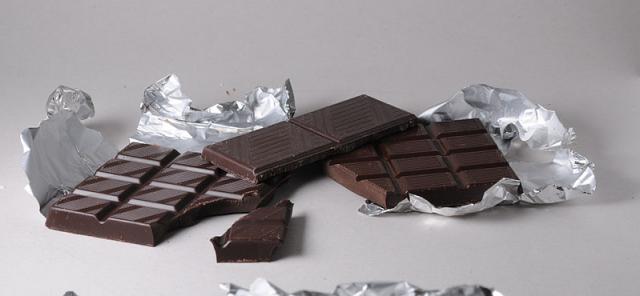
So what does all this mean? Well there are certainly benefits to be had from chocolate. But do the benefits outweigh the large amounts of sugar, caffeine and theobromine which are likely to have a negative impact upon the metabolism? It seems the best way to enjoy chocolate would be to adjust your palate towards darker varieties of chocolate until a 70% chocolate can be enjoyed. Naturally organic varieties will reduce exposure to harmful pesticides and other undesirable compounds, which are commonly used in cocoa bean farming. A fairtrade bar will also go some way to ensuring the farmers who work so hard to produce the dried cocoa in the first place receive a decent price for their efforts too. So for a guilty free conscience we recommend a 70% bar of organic, fairtrade chocolate eaten a little at a time. To be honest a small square or two of this chocolate is quite satisfying and usually hits the spot and no more is needed, so the bar lasts considerably longer!