Local or Organic? What is best?
The Ecologist published a small article today asking the question if it is best to source local food, or organic food. This is a very interesting question with a simple answer. Ideally we should seek both!
If your food meets organic standards or higher and is sourced within your own county or region then this, by far, is going to provide the best nutrients and will have the least food miles, release the least pollution and support the local economy. This may seem obvious for regular visitors to Natural Food Finder, but the question gets more interesting when you cannot actually source food that meets both criteria. So is it better to eat organic food that is sourced from further away, perhaps even overseas, or is it better to eat locally produced food that does not meet exacting organic standards?
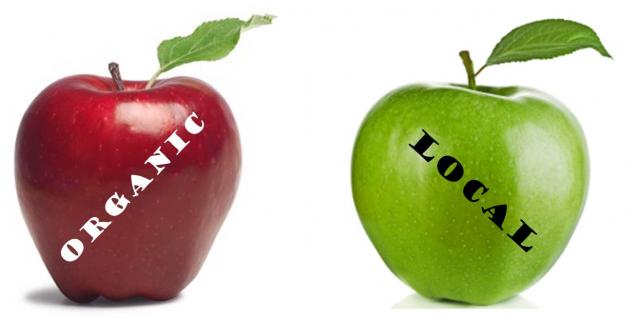
This is where the answer becomes a little more grey. Organic food clearly carries numerous benefits, particularly providing a guarantee that certain undesirables are not used in the production of food. The Soil Association identifies:
- no pesticides and herbicides
- no artificial fertilisers
- no genetically modified crops, feed or ingredients
- no routine antibiotics or worming medications in rearing livestock
- no animal cruelty
Each of these benefits reduces the toxic load a food will have on the body as well as offering a much more eco-friendly footprint on the food produced through this farming methodology. The Ecologist quotes the Soil Association in identifying that the production of 1 tonne of artificial fertiliser requires 108 tonnes of water and 1 tonne of oil, whilst also producing 8 tonnes of carbon dioxide in the process. They also identify that the production of artificial fertiliser releases more toxic nitrous oxide (a more potent greenhouse gas than carbon dioxide) into the environment than almost any other source.
Organic food certification can be a costly and heavily administrative process for smaller farmers that may deter them from having their food 'certified organic.' Also it does not take too much time looking through typical supermarket organic produce to realise that a large percentage of it does not even come from within your own country. In a previous visit to the supermarket I took the time to look for the country of origin across the whole range of apples and found in a single supermarket apples from Chile, South Africa, USA, Peru, Israel, New Zealand and just one non-organic, budget line from the UK. In order for that supermarket to provide me a selection of apples outside of the British season it had transported apples from all these various countries around the globe, a distance totalling at least 36,500 food miles!! How is this sensible? The organic varieties were not guiltless in this ridiculous level of transportation as they came from New Zealand, South Africa and USA. Is the organic trade off of fewer nasties and better ethical production on the farm sufficient to offset the hefty burden to the environment when food is transported thousands of miles across the world? The Aviation Environmental Federation identifies that aircraft account for 12% of the world's greenhouse gases. This contrasts with the Soil Association estimating that conventional agriculture accounts for 32% of greenhouse gases.
If your food is purchased from local suppliers, from within your home county then there will be minimal food miles and as such practically no pollution and greenhouse gas burden from transportation. However, if the food is produced using conventional farming methods then it will be adding to greenhouse gas emissions through the artificial fertilisers and agri-chemicals used on the land and crops. It must be remembered that there may be local food producers who do farm to higher welfare standards who do not carry organic certification. This is a winning situation if organic, local produce cannot be found.
The benefits of purchasing locally grown food include:
- fewer food miles
- produce allowed to ripen longer on the parent plant to optimise nutrient levels
- less time for nutrient losses during shorter storage times
- increased awareness and reliance on seasonal foods and dietary variation based on the season
It is clear that seeking for organic food is desirable. It is clear that seeking for local and seasonal food is desirable. If both can be obtained then this is ideal. If this is not possible then find out as much as possible about the food you are purchasing and make the best decision you can with what is on offer. If the food is organic, but not local then try to choose the item with the fewest food miles. If it is local, but not organic then try to find the item with the best farming standards that you can.
If you have any comments on this discussion or thoughts we have not included, then please comment on this blog. We would love to hear from you. Thanks. NFF.