10 things you need to know about losing weight.
10 things you (apparently) need to know about losing weight
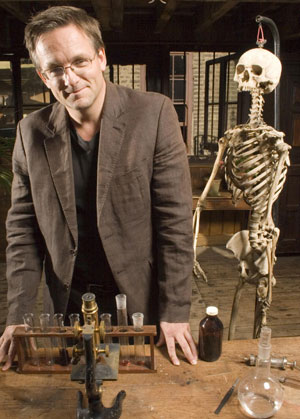
Michael Mosley: Twitter
In this BBC programme that aired recently, medical journalist Michael Mosley investigated the 'latest' scientific breakthroughs in slimming, uncovering ten ways you can accelerate the shedding of unwanted body weight. We thought a quick review of the validity of their best tips might be in order. If you stick it out we will also offer you the Natural Food Finder top 10 tips to real, nourishing weight management.
The programme included tips that covered the slimming secrets of soup through to our brain's neural response and increased drive to eating after skipping meals.

Alex James
Musician Alex James, who is a passionate cheese maker, tried out an intriguing scientific discovery - that low-fat dairy products, rich in calcium, can help you excrete more fat and as such absorb fewer calories into your blood, reducing the chance of excess fat storage. Is that really a good thing? More of the nutrients in our food leaving without benefiting the body! Remember that the fat soluble nutrients, vitamins A, D and K, will only be found in the fats, so if we excrete the fats we excrete the vitamins too.

Amy Lame: Twitter
Radio presenter Amy Lame learns how just a few small changes in her daily activity routine can help burn 200 or so more calories, which is handy for those who hate exercise and the gym.

Debbie Chazen: Twitter
Actress Debbie Chazen, who eats 'healthy' foods in abundance, has her metabolism checked and keeps a food diary - with some surprising results.
The show revealed the scientific reasons behind each of these top secrets and how the regular 'Joe' on the street could benefit.
Here are the 10 scientific claims: (You'll excuse our NFF commentary in brackets, we couldn't resist)
1: Don’t skip meals, especially breakfast as it makes you crave higher calorie foods (Is this a surprise? You miss food and you body makes you hungry to make up for it! Fairly obvious. The interesting point is that poor sleep and/or a missed breakfast particularly causes us to seek for carbohydrates - this will lead to higher blood sugar levels and if continued over time increased weight gain)
2: Use smaller plates to control portion size (Fairly obvious, no further comment)
3: Count your calories (Boring! Will this unrelenting drone of the diet world ever cease. Please see our previous blog on this topic to get a taste for the weak theory underlying calorie counting for weight loss)
4: Don’t blame your metabolism (Agreed! Few people actually have a slow metabolism. This excuse only serves to stop people taking responsibility for the condition they are in)
5: Protein staves off hunger pangs (A decent point, but the protein should and must be eaten with the natural fats that exist within the protein rich foods)
6: Soup keeps you fuller for longer (They didn't test tinned or ready made soups - it was a blended full meal and a glass of water - very thick and more like mash than soup. The longer food sits in your stomach the longer it takes for the nutrients to actually get into your blood and affect your body. Do we really want to slow that down?)
7: The wider the choice, the more you eat (Especially if the choice is cheap processed food that doesn't satisfy in the first place)
8: Low fat dairy helps you excrete more fat (Oh dear! Please don't use this ridiculous concept - fat is not our enemy unless it is processed, it is essential to health, energy and optimal function)
9: Exercise goes on burning fat even while you sleep (This is not new - exercise scientists have known and studied this fact for years - but it is only really effective when vigorous exercise is utilised, not the light activity tested on the show)
10: Keep moving and lose weight – Just keep active (Same old story we have heard for 30 years, simple light exercise will make all the difference by burning more calories. Official UK statistics show that adult activity levels have risen every year since the mid 1990's during which time we have continued to get fatter!)
We thought it would be much better if offered you 10 suggestions to help you really benefit and lose weight this year without sacrificing your health in the process.
Here is our 10 suggestions:
1: Don't eat cold processed cereals for breakfast - they will offer minimal nutrition, rapidly raise blood insulin levels and leave you hungry again by mid morning.
2: Seek a feeling of satisfaction after a meal, not a feeling of being physically full and bloated - How often have you had a meal that left you physically full, but afterwards felt you wanted something else, possibly a sweet treat? This is the body telling you to seek out needed nutrients that were not sufficient in the meal you ate.
3: Don't get caught up counting calories - it is time consuming, almost impossible to do with any degree of accuracy and has never been scientifically proven to successfully lose the dieter the amount of weight they should lose when the deficit of calories is calculated. In fact most barely even lose half of the weight they should have lost when the calorie deficit is worked out. Low calorie diets have almost invariably been found in scientific trials to fail in the long term. Short term losses are mostly regained after 6 months.
4: Be aware of your metabolic type - not everyone is designed to eat the same food. Some people will be healthiest on a higher protein and fat diet low in carbohydrates, while others will do well on a higher, whole food carbohydrates diet with moderate protein and low in fat. After all we live a world with vastly differing climates. In colder climes nearer the poles there is much less fruit, veg and grains available and so they would need to eat more protein and fat rich animal produce. Nearer the equator where there is plentiful fruit and veg all year round and the weather is hot, the intake of plants an fish is normal and feels natural. heavy meats and fat in hot weather is often not desirable.
5: Proteins are the most potent food to satisfy - however if eaten lean they will do little to sustain energy levels as less than 12% of protein calories contribute to daily energy. Nature has packaged most protein foods with adequate fats to serve as a excellent energy source. When proteins are eaten with the natural fat it provides satiety with greater longevity between meals and the energy needed to carry out daily activities.
6: Soups should be based on home made stocks and broths - a soup is not just about blending up a meal. Real nourishing soups made from bone broths and vegetable stock are rich in minerals, nutrients and nourishing compounds that are excellent for digestive health and healing the body. They take time and care to prepare and will certainly leave you feeling satisfied for long periods. A blended mush, will leave you feeling bloated and not satisfied.
7: A broader choice of natural, whole foods is heaven - Being able to draw upon a wide choice of nourishing foods, meals and produce will lead to excellent health, reduce the volume of food that needs to be eaten and help the consumer develop a strong relationship with food and life.
8: Full fat dairy is beneficial - and not because we just might excrete more fat. Several studies have shown clear associations with those who drink full fat dairy and lower rates of heart disease, lower rates of obesity, especially abdominal obesity, lower rates of diabetes, lower rates of asthma and allergies and of course stronger bones!
9: Exercise at a higher intensity - improve your tolerance for more vigorous exercise. This will increase your aerobic threshold which will enable you to more easily deliver oxygen to the cells of your body. If the cells receive a better supply of oxygen then they are better able to utilise fat a a fuel for energy. Higher intensity exercise, both cardiovascular work and resistance training, has been shown to increase metabolism or 'after burn' by as much as 10% for between 15-48 hours after the exercise session.
10: Keep improving on your dietary habits - lots of small bouts of activity will not resolve the pot belly or muffin tops, but continual efforts to improve the quality of food eaten will lead over time to a truly nutrient dense diet that will bring with it optimal health and, of course natural weight loss, until your body reaches it's desirable weight.
This TV programme promised to reveal new and exciting scientific research firmly based on facts, but we found it to be mostly disappointing as it seemed to churn out over-simplified, dated information not dissimilar to many other weight loss programmes.
We hope that our top 10 weight loss tips will not only help you lose a few pounds, but help you get closer to optimal health and function throughout 2011.