Ban Butter? The innocent framed!
The Daily Mail reported today (18th Jan 2010) on an influential heart surgeon's call to ban butter and other sources of saturated fat. It is ridiculous after 40 years of the same old rhetoric to reduce saturated fat content in our diets with little proven benefit that 'experts' still call for enforcement of the issue! This is a democratic country, we should be allowed to choose what foods we would like to have as part of our diet. The article read as follows:

'Butter should be banned to protect the nation's health, according to a leading heart surgeon. Shyam Kolvekar says only radical action can save growing numbers of young adults from heart attacks and clogged arteries.Warning of the dangers of other foods high in saturated fat, he advises people to eat less red meat, take low-fat milk and switch to olive and sunflower oil.
Saturated fat is blamed for a third of the 200,000 premature deaths from heart disease a year. Adults are eating an average of 800 grams of it a month - 20 per cent more than the recommended limit. Hitting the recommended level could save 3,500 lives a year.Mr Kolvekar, a consultant at University College London Hospitals, said: 'By banning butter and replacing it with a healthy spread the average daily sat-fat intake would be reduced by eight grams.'This would save thousands of lives each year and help to protect them from cardiovascular disease - the UK's biggest killer.'
Of course nobody wants to cause heart disease in other people by giving bad advice. Dr Kolvekar is advising what he has learned through his years of being a heart surgeon. This has likely led to first hand experience many times over of the dangers of heart disease, atherosclerosis or plaque build up in the arteries, thrombosis or clotting within the arteries and ultimately the death of the heart and the individual. Many may question our expertise here at Natural Food Finder over a heart surgeon. But consider this. Just because a heart surgeon has seen diseased hearts and arteries and operated on such diseased organs does not mean that he fully understands how the body has created that illness before he scanned the body or opended it up. The medical establishment place the greatest amount of their time and money researching disease and ill health. Therefore they fully understand disease and how it destroys the body. How much time and effort is placed on studying the healthy and the vibrant? Only those who really go out of their way to find out what truly brings optimal health can understand an effective dietary strategy to become healthy.
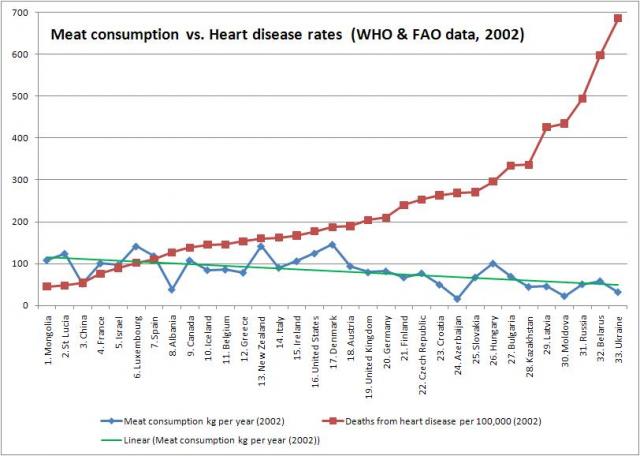
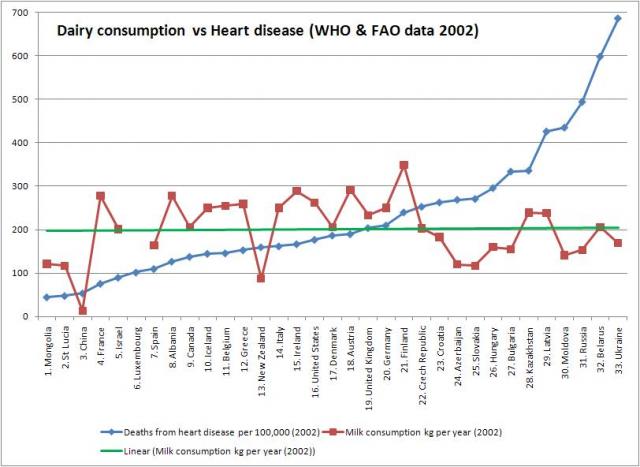
So what evidence exists that proves that butter and for that matter saturated fat is innocent. If you have not yet read our previous blog on big fat myths that may be a place to start. However, I am going to provide additional evidence to this argument.Not only has butter been implicated in this argument, but saturated fats from meat and dairy in general have been highlighted as causative in heart disease. Data freely available from the World Health Organisation (WHO) and the Food and Agricultural Organisation (FAO) clearly shows that the link between meat intake and heart disease is not quite as obvious as Dr Kolvekar is making out. In fact it actually ilustrates the opposite relationship! In countries eating less meat there are higher rates of heart disease. Whilst it is true that in some countries with low heart disease rates they do have low meat intakes it is certainly not true as a general rule.
- Butter contains nutrients that are protective against heart disease such as vitamins A, D, E, iodine and selenium
- Butter is rich in other trace minerals such as maganese, chromium, zinc and copper
- Butter is a valuable source of short and medium chain fatty acids that strenghten the immune system, boost metabolism and have anti-microbial properties
- Butter from grass fed cattle is rich in CLA an anti-carcinogenic fatty acid
- Butter contains something called the Wulzen factor that prevents joint stiffness and arthritis ensuring calcium is deposited in the bones and not the joints