
Fed up with the BIG FAT myths
If there is any food group that is misunderstood more than any other it is fats! There is so much over simplification and down right incorrect information being passed around about fats that we have decided to be sure that you are fully informed about what foods provide what fats. Think of it as our new year gift to you. It is often thought that fats sourced from animals are saturated and those from plants are either monounsaturated or polyunsaturated. This is a classic example of the way that government has simplified information to the point of absolute error. Plants contain saturated fats just as animals contain both mono and polyunsaturated fats. Current guidelines tell us that we should limit saturated fats to a maximum of 10%, whilst poly and monounsaturated fats make the total up to 35% of daily calories (the greatest part coming from monounsaturated fats). Does limiting meat and dairy and emphasising plant foods help us achieve these guidelines? In fact 3 out of the top 5 most saturated fats in the world come from plants! 3 out of the top 5 contributors of monounsaturated fat come from animal sources. Whereas all 5 of the richest sources of polyunsaturated fats come from plants.
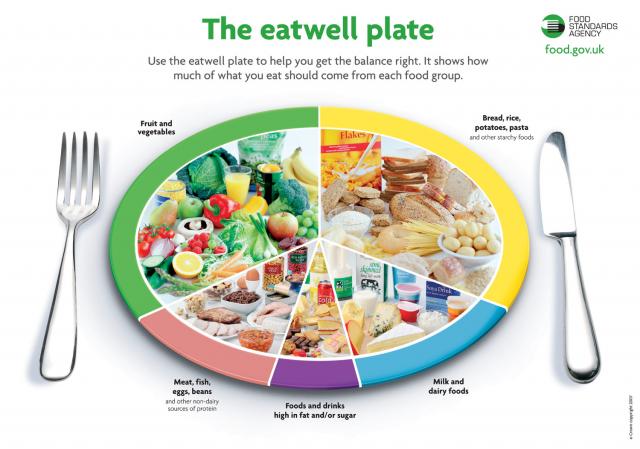
We are told saturated fats cause heart disease, monounsaturated protect against heart disease whilst polyunsaturated lower cholesterol and as such lower heart disease risk. We are also regularly advised now to ensure we have plenty of omega 3 fatty acids, essential fats needed for cellular function that have also been shown to protect us from chronic diseases. When we consider the government food plate we can see the clear effort to keep animal sourced foods to a minimum and emphasise plants foods as mentioned earlier. This is offered as guidance to minimise our intake of saturated fat and thereby the dreaded threat of heart disease. Of course this is assuming that the long held belief that saturated fat causing heart disease is actually correct! Some evidence suggests this hypothesis to be incorrect, including the World Health Organisations biggest ever study into heart disease risk factors, the MONICA study. Study the two charts below drawn from official data in 1998 and 1999.
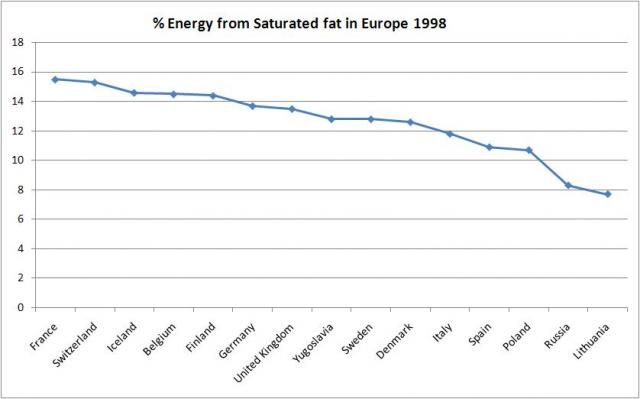

Note that a few countries do not show the predictable pattern that we have been taught - that saturated fat causes heart disease. France has the highest saturated fat intake but has CHD deaths in the lowest third in Europe. This has often been called the French paradox. However, Switzerland have the second highest saturated fat intake and also have CHD deaths in the lowest third. Belgium and Germany have high saturated fat intakes and relatively low CHD death rates. The UK and Finland do have high CHD death rates, but have lower saturated fat intakes than France, Switzerland and Belgium all of which have low death rates. On the flip side both Russia and Lithuania have very low saturated fat intakes and have CHD death rates in the upper half of the table. As you can see it is not always as obvious as we are often told. This is part of the problem with over-simplifying the science and guidelines.
Despite this the food guidance that is currently offered still does not guarantee a low saturated fat diet. If you study the table of the composition of various fats you will see that this direction can be difficult to achieve by following the Eatwell Plate.
| Source of Fat | % Saturated | % Mono | % Poly | % Omega 3 | % Omega 6 |
| Coconut | 91% | 6% | 3% | ||
| Palm kernel oil | 84% | 14% | 2% | ||
| Butter | 66% | 30% | 4% | 1% | 3% |
| Cocoa butter | 60% | 38% | 2% | ||
| Lamb tallow | 54% | 35% | 5% | 5% | |
| Beef dripping | 49-54% | 42-48% | 3-4% | 3% | |
| Palm oil | 49% | 40% | 10% | 9% | |
| Human breast milk | 48% | 33% | 16% | ||
| Lard | 44-50% | 40-45% | 11% | 11% | |
| Duck fat | 35% | 50% | 15% | 14% | |
| Chicken fat | 30-32% | 48-50% | 18-23% | ||
| Goose fat | 29% | 59% | 11% | 11% | |
| Turkey fat | 29% | 44% | 23% | 23% | |
| Cottonseed oil | 29% | 18% | 52% | 52% | |
| Peanut oil | 22% | 46% | 31% | 31% | |
| Avocado oil | 22% | 60% | 18% | 1% | 17% |
| Cod liver oil | 21% | 57% | 20% | 15% | 1% |
| Olive oil | 15% | 73% | 10% | >1% | 9-10% |
| Soybean (vegetable) oil | 15% | 22% | 62% | 61% | |
| Sesame oil | 15% | 41% | 43% | 43% | |
| Corn oil | 14% | 27% | 59% | 1% | 57% |
| Sunflower oil | 13% | 18% | 69% | 69% | |
| Grapeseed oil | 11% | 16% | 73% | 1% | 72% |
| Flaxseed (linseed) oil | 9% | 17% | 74% | 60% | 14% |
| Walnut oil | 9% | 23% | 66% | 12% | 54% |
| Evening Primrose oil | 9% | 9% | 82% | 82% | |
| Safflower oil | 8% | 13% | 78% | 78% | |
| Hempseed oil | 8% | 12% | 78% | 19% | 59% |
| Canola (vegetable) oil | 6% | 56-66% | 29-36% | 10% | 19-26% |
| Rapeseed (vegetable) oil | 4% | 16% | 80% | 10% | 14% |
All figures are taken from Know Your Fats by Mary G. Enig PhD
It can be clearly seen from the table above that all fats contain a certain amount of saturated, monounsaturated and polyunsaturated fats. If you scan over the sources you can also see that an excess of saturated (above 10% according to guidelines) can easily be obtained from plant foods as well. This is partly why in 1986 the US ran a campaign to demonise the highly saturated tropical oils like coconut, palm and palm kernel oil. This has since seen the removal of trpoical oils from many processed foods and the inclusion of supposedly heart healthy vegetable oils. Yet today many are extolling the benefits of coconut oil as one of the healthiest oils on earth and certainly one that has been eaten for hundreds of years without concerns over heart disease. Many sources of both plant and animal fats contain a significant amount of monounsaturated fats, the fats that even the mainstream found to be protective against hardening of the arteries. Olive oil has the longest history but if you look even lard and beef dripping are rich sources! Whilst all of the rishest sources of polyunsaturates do indeed come from plants most of these, apart from cottonseed and corn oil, are all relatively new to the food supply and were never used in abundance across the traditional populations of the world. Rapeseed was used traditionally in India, but the seeds were kept intact and only ground into oil at the request of a consumer and usually used within a couple of days - this minimised the time for rancidity and free radical production to occur in this highly unstable polyunsaturate. Canola or low erucic acid rapeseed oil was only developed in the 70's to meet the standard guidelines that man created - not because nature had evolved to provide this highly monounsaturated oil.
Nature has evolved to produce numerous sources of fats across a range of foods that have been eaten for generations in many countries around the world. Huge variation in saturated, monounsaturated and polyunsaturated fat intake exists across these cultures, but all exhibited excellent health when they ate the foods that existed within their natural habitats. Total fat intakes varied from 30-80% of calories, yet there was no increase in heart disease when the foods were eaten at their best and found locally to the people. The same is true of mono and polyunsaturates. Fats are a necessary part of health and will deliver that health when eaten as Mother Nature intended as part of nutritious, naturally occuring, locally sourced food. In 2010 we need to overcome our fear of fats knowing that they have represented a significant part of man's diet for as long as man has been around.





Comments
Saturated Fats
The toughest myth to debunk in the public's mind is the nonsense that saturated fats are unhealthy, cause weight gain and CHD. I consume saturated fats. I am uber-healthy, in great shape and have low cholesterol.
Reply to saturated fats
Thanks Neil, you are one of many people who have reported improvements in health and cholesterol levels when consuming healthy sources of saturated fats. We must be sure that these fats come from organic, grass fed animals, raw dairy where possible, good quality coconut oil and wild ocean caught fish. Saturated fats from poorly reared, industrial animals and fish will be full of toxins and be damaging to our health.