
Paleo diet for sport - Guest blog
Discovery Learning - Guest Blog
For sports people including both recreational and professional athletes, food and diet when raised as topics of conversation invariably provoke a lively discussion. Some athletes, consider diet absolutely central to their performance and apply heroic discipline to strict dietary protocols, often spending vast resource on specialist products and dietary supplements. Others largely ignore their diet and focus entirely on sports specific training and exercise; eating pretty much the same as they always did – just more of it.
One recurrent dietary idea in sport is that a return to the eating habits of our ancestors will lead to a boost in sporting prowess. This notion generally referred to as the ‘Palaeolithic’ diet (PD) suggest that we turn back time and eat only the foods that sustained us through our pre-modern evolution. Proponents argue that as mankind moves further and faster away from this traditional diet, the proliferation of the degenerative ‘lifestyle’ diseases responsible for the majority of premature deaths in developed societies will continue. Sports people who champion the PD would add that the introduction recently of many ‘modern foods’ only serves to sap strength and lead to blunted senses and poor sporting performance.
The Palaeolithic (pre-modern) diet refers to the foods that mankind consumed during the Palaeolithic or Stone Age era and is also referred to as the ‘Stone Age Diet’, ‘Cave Man Diet’ or the ‘Hunter-Gatherer Diet’. The basic principles of the Palaeolithic Diet are that for millions of years, humans and their relatives have eaten wild meat, fish, fowl and the leaves, roots and fruits of many plants and because of this our genes are now coded for these foods as we have evolved around them. The Neolithic Revolution was an agricultural developmental phase that involved the transition from nomadic hunting and gathering communities and bands, to agriculture and settlement. It occurred in various human societies ten to twelve thousand years ago and led to the adoption of early farming techniques, crop cultivation, and the domestication of animals for their meat, milk and eggs.
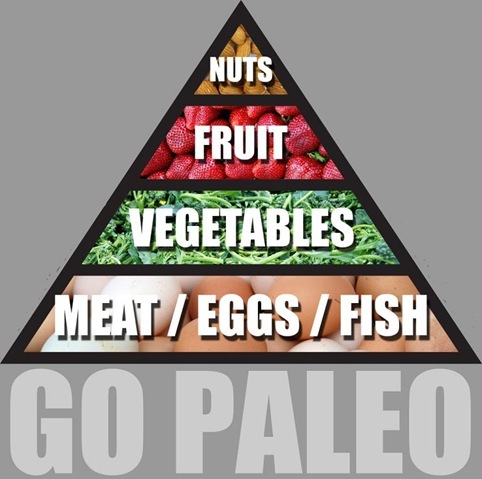
The benefits of the Neolithic Revolution during early times was an ability to live in permanent settlements, with less nomadic lives and the capacity for higher population densities. Grains including wheat, corn, barley, rice, sorghum, millet and oats, and their products of flour, bread, rice, noodles and pasta are not allowed in the PD. Also excluded are more modern plant staples such as potatoes (and sweet potatoes) and beans as these Neolithic foods are said to contain compounds that are toxic to us by advocates of the PD. Meat of domesticated animals is barred as of course is dairy, salt and sugar, and any artificial or refined or processed items such as seed and vegetable oils.
On the face of it this indeed seems like a reasonable point of view and it is easy to see why giving some serious consideration to moving towards such a diet would probably not be a bad thing for most people living in the developed world. One may however wonder why it would make any difference at all that a person considering the PD diet was involved in sport
or not. Either the diet is of benefit to humans or it isn’t. Well, for the purpose of this article, I’d like to focus on the main dietary difference between an athlete and a person that has no interest in physical performance, which is the large energy variation between the two. Typically a professional sports person taking part in a demanding sport may consume 50 - 100% more daily calories than a weight matched sedentary person.
Following vigorous exercise, muscles need to refuel and repair (in that order). Carbohydrate is required to re-synthesise the depleted glycogen within the muscle and until this is complete, adequate repair and rebuilding of muscles that have been used as a fuel source (gluconeogenesis) during prolonged exercise cannot adequately commence. Therefore a good and plentiful supply of carbohydrate is important for the athlete, during exercise to delay the onset of exhaustion brought on by glycogen depletion and also to immediately start the refuelling and repair immediately after the event (ideally during the two hour window of opportunity for accelerated fuel uptake by the muscle following exercise). And then to continue refuelling and even glycogen loading for the next training session or event.

For a professional athlete then, a requirement for 2,500kcal of carbohydrate each day would not be uncommon. Considering the exclusion of many of our current carbohydrate staples from the PD it would be extremely difficult to achieve this volume of CHO simply by eating vegetables and fruits. The sheer volume required would almost certainly make it an overwhelming task. In order to gain 2,500kcals from fruit and vegetables you would have to eat for instance: six and quarter kilos of blackberries (400kcal/kg) or ten kilograms of Broccoli (250kcal/kg). In contrast you would only need two and a quarter kilos of baked potato (1,100 kcal/kg) or about one and a half kg of cooked rice (1,600 kcal/kg). The reality is that even using the Neolithic foods of today (potatoes and rice) most sports people still have to supplement with carbohydrate and protein products in order to achieve the sheer volume that they need. Interestingly at the London Olympics 98% of competitors in both the Para/Olympic games stated that they regularly or always used sports supplements in preparation for an event.
In summary then, whilst a PD may well offer huge benefits for health and wellness and the prevention of chronic lifestyle conditions, and may also be part of a healthy living regime for those involved in recreational sports, it is highly unlikely that it will get any traction as a vehicle for elite sporting success.
About the author:
Alan Jackson MSc is a lead tutor and researcher for Discovery Learning and regularly presents on wellness and dietary aspects of the health and personal training courses such as sports nutrition, clinical nutrition and weight management.







Recent comments
15 weeks 2 days ago
16 weeks 6 days ago
43 weeks 2 days ago
45 weeks 2 days ago
46 weeks 2 days ago
48 weeks 1 day ago
1 year 33 weeks ago
1 year 34 weeks ago
1 year 34 weeks ago
1 year 35 weeks ago